




How Moral Superiority Stalled the Climate Movement - and How to Rebuild It
We wanted to save the planet. Instead, we divided it.
As the world gathers for COP30 in Brazil, optimism has faded. The era of easy sustainability is over. Companies are quieter, not louder. Climate fatigue is real. Budgets are tight, growth is slow, and the word sustainability has lost its shine. In boardrooms everywhere, the question has shifted from “What’s right?” to “What’s the return?” That’s not cynicism - it’s survival.
Sustainability must now prove its value not just in moral terms, but in measurable outcomes. The era of standing for good is giving way to the era of doing good that performs. And that shift demands honesty about why we’ve failed to bring the majority along—in business, in society, and in politics.
The failure of purity
For years, we told companies to go faster, greener, higher. We formed ethical alliances that banned work for airlines or car companies—while still flying ourselves. We demanded transformation without acknowledging our own contradictions. Should we really ask more from companies than we’re willing to do ourselves? The hardworking single mom isn’t ready to skip her family’s flight to Turkey - and raising ticket prices won’t hurt the affluent; it will hurt her. We wanted to lead the charge, but too often we led with blame - turning sustainability into a contest of purity instead of a coalition for progress. “Good enough” was never good enough. And when companies or people fell short, we called them out. But finger-pointing doesn’t fuel transformation—it freezes it. Many brands have quietly retreated, afraid to take imperfect steps for fear of backlash. And it’s not just businesses. As citizens, we’ve felt it too - the constant pressure to live perfectly, to recycle more, fly less, consume nothing. Always feeling we’re not doing enough good. We forgot that most people—and most businesses—don’t join movements that make them feel small.
The widening divide
The result is a sustainability culture split in two: on one side, the pioneers—the B Corps, the activists, the believers. On the other, a silent majority watching from the sidelines—or, increasingly, pushing back. A coal worker or farmer feels cast out by what seems like an elitist agenda. These are people who live from the land and feed us. Shouldn’t they be our allies rather than our enemies? Empathy works better than accusation.
Relatability beats righteousness
The companies truly moving markets aren’t preaching - they’re connecting. They understand that emotion, not ethics, drives behavior. Take Hollie’s, taking on the breakfast giants with a simple, empowering promise to cut sugar. Or Oatly, which made the plant-based shift not a sacrifice, but a cultural wink: “It’s easy. You can do this.”
These brands succeed not because they’re perfect, but because they’re relatable. They make doing good feel good - and commercially smart. They don’t guilt people into action; they invite them. That’s the future. Not the sermon, but the story. Not moral superiority, but market relevance.
The business of business
Values matter - but so does value creation. If we want companies to invest in sustainability, we must show how it drives growth, loyalty, and resilience. Purpose can’t remain a halo. It has to prove its commercial muscle. We must lure companies not just with morality, but with reward - the visible payoff that comes when doing good is also good business. Purpose without proof is no longer enough.
FROM FINGER-POINTING TO HAND-HOLDING
So where do we go from here?
Trade purity for participation.
Progress happens in steps, not leaps. When we ridicule a company for being “not green enough,” we discourage their first move. Let’s reward progress, however imperfect.
Stop blaming, start enabling.If we want companies to change, we need to guide them with evidence, not guilt. Replace the moral high ground with practical solutions that drive both purpose and profit.
Make it human again.
Sustainability only works when it connects to real life—better breakfasts, cleaner air, safer futures. Let’s make people feel part of it, not preached at.
A call for honesty and inclusion
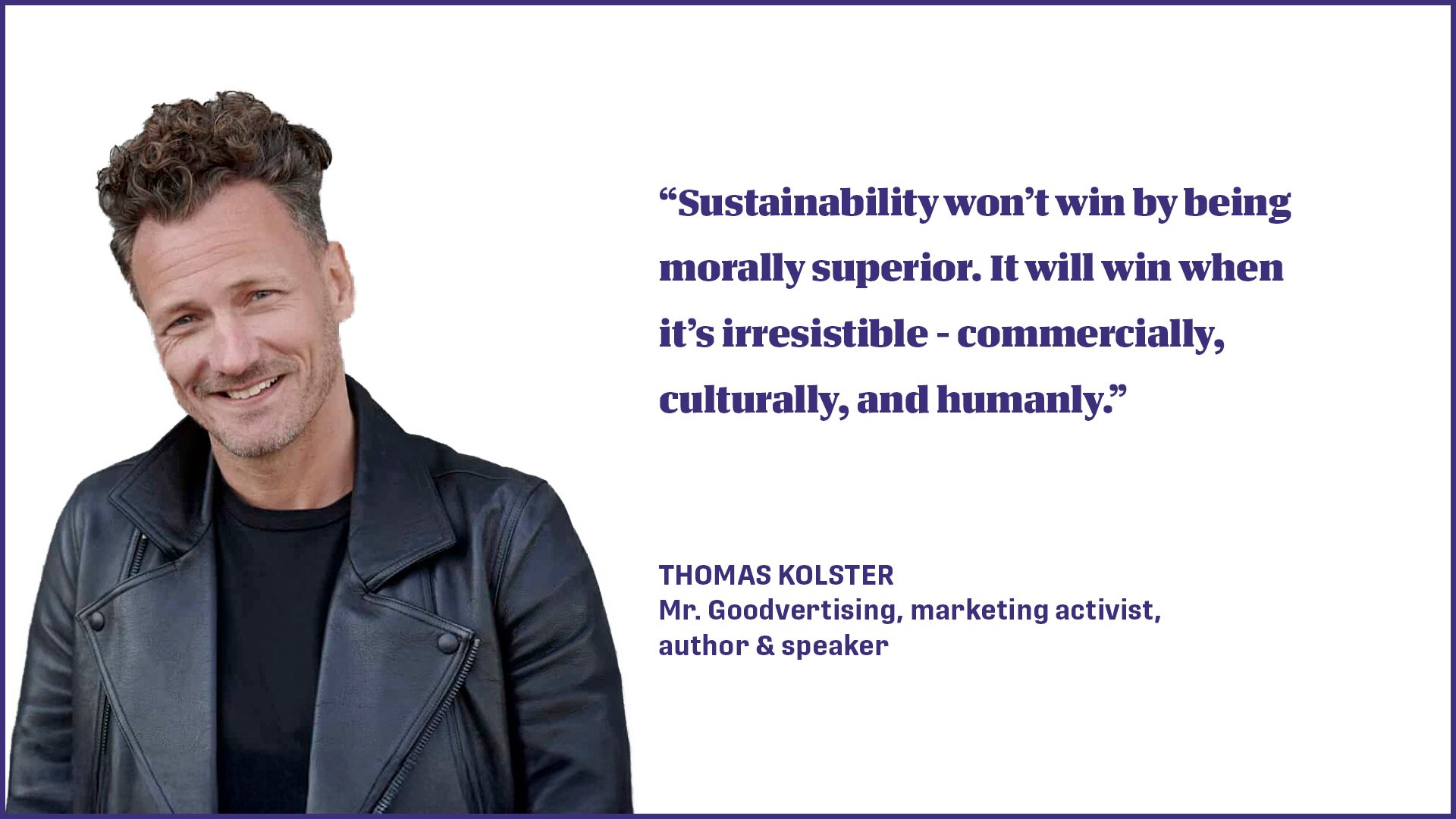
As COP30 unfolds, the world doesn’t need another round of lofty promises. It needs proof – after all, it’s about better living. We have to stop bullying and start building. Stop hiding behind virtue and start showing the commercial case for it. If you know more, use it to lift others up - not shut them down. Sustainability won’t win by being morally superior. It will win when it’s irresistible - commercially, culturally, and humanly.

huolto@mediateko.fi